A visor is one of the most comfortable ways to keep sun off your face during a round of golf, a 10K, or an afternoon at a resort desk. It is also one of the most misunderstood, because the shape that makes it breezy is the same shape that leaves part of you exposed. If you are ordering custom visors for a team, an event, or a brand, it pays to know exactly what the product does against ultraviolet light, what the numbers on the label mean, and how the fabric you choose changes the answer.
What a visor shades, and what it leaves open
Start with an honest picture of the coverage. A visor puts a brim over your eyes and forehead and wraps a band of fabric around your temples, so it shades the face, shields the eyes from glare, and protects the forehead where the sweatband sits. What it does not do is cover the crown of your head. The top is open by design, which is why visors run cooler than caps, and it means a visor is a partial sun solution rather than a complete one. Anyone with thinning hair or a sensitive scalp still needs sunscreen or a full hat on top of what the visor provides.
Two parts of a visor actually interact with UV. The brim casts a shadow across your face and, depending on its length, part of your neck, and the fabric band rests against your forehead. The sun protection value of a visor therefore comes from two things working together: the geometry of the brim, which decides how much of you sits in shade, and the fabric itself, which decides how much UV gets through the material that touches your skin. A label rating speaks only to the second part.
The UPF number, in plain terms
UPF stands for Ultraviolet Protection Factor, and it describes how much of the sun’s UV a fabric blocks. It is the textile cousin of the SPF number on sunscreen, but it is measured on the material rather than on skin. The scale is usually read in three bands: a rating of 15 to 24 is considered good, 25 to 39 is very good, and 40 to 50 or higher is rated excellent. Fabrics below 15 are generally not marketed as sun-protective at all.
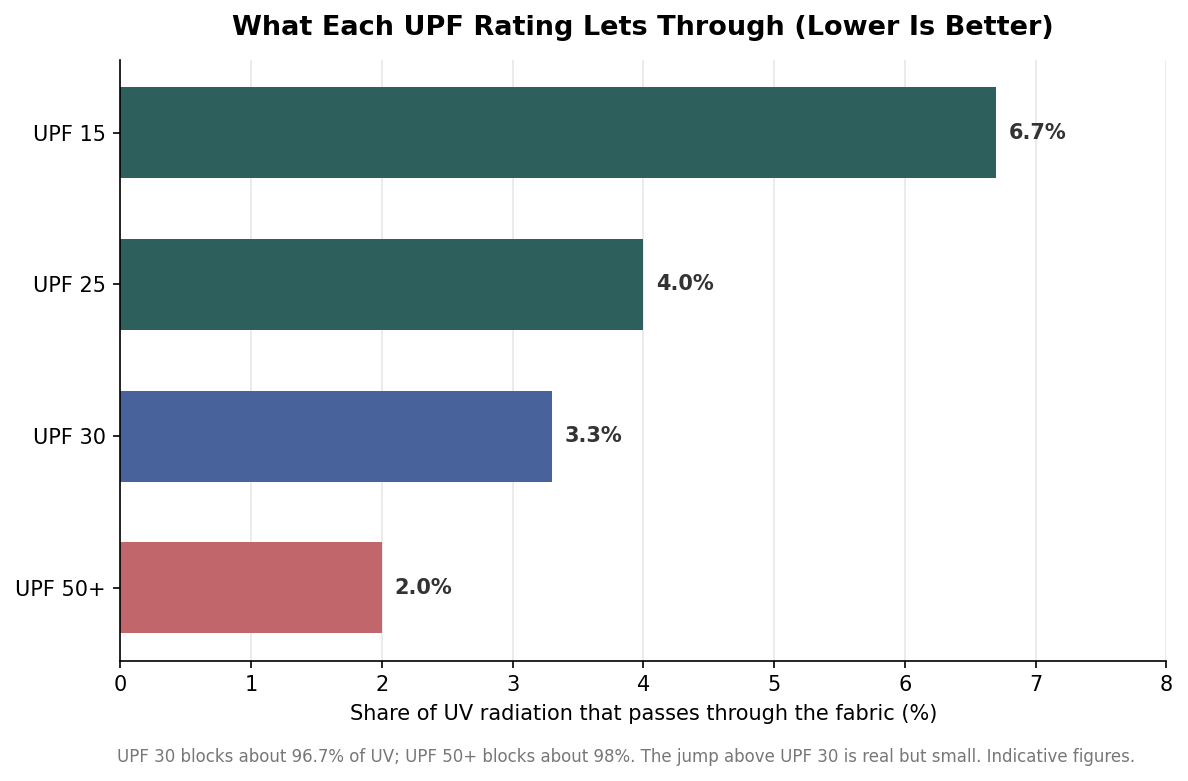
The important thing to understand is how little separates the top ratings, because the marketing tends to obscure it. A UPF 30 fabric blocks roughly 96.7% of UV radiation, letting about 3.3% through. Step up to UPF 50+ and you block about 98%, letting only 2% through. That is a real improvement, and for long days outdoors it is worth having, but it is a jump of a little over one percentage point, not a doubling of protection. The number climbs fast at the low end and then flattens, so the meaningful decision is clearing the UPF 30 bar, not chasing ever higher figures. The plus sign on UPF 50+ simply signals that the fabric tested beyond 50.
Where the rating comes from
UPF is not a marketing claim a supplier can assign at will. In the United States it is measured under AATCC 183, the standard from the American Association of Textile Chemists and Colorists, while Australia and New Zealand use the older AS/NZS 4399. In both cases a lab shines ultraviolet light across the 280 to 400 nanometer range through the fabric and measures how much passes through, weighting the result toward the wavelengths that cause sunburn. If a custom supplier quotes a UPF rating, it should be able to point to testing under one of these standards rather than a general assurance that the fabric is “UV resistant.”
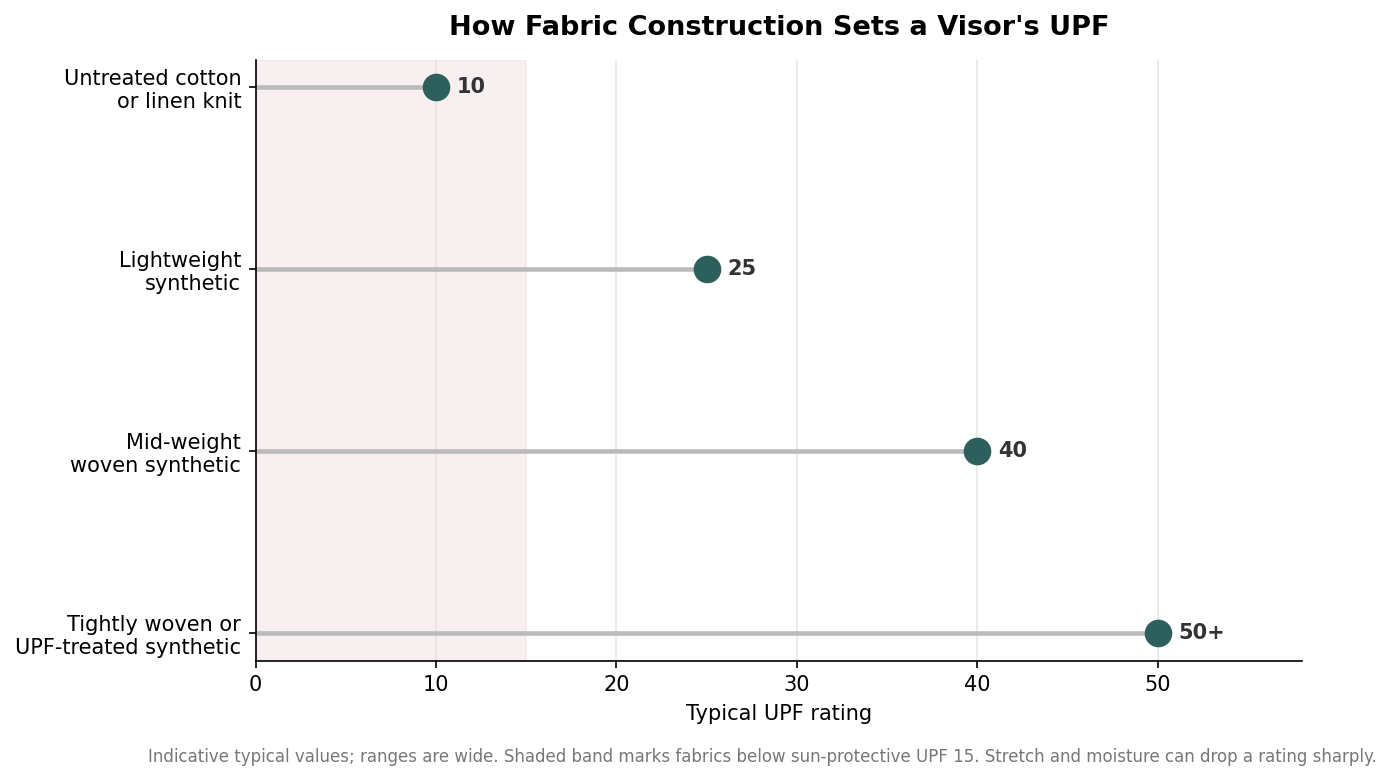
What sets the number is the construction of the cloth, and this is where your fabric choice on a custom order matters. Weave tightness is the biggest lever. The more densely the yarns are packed, the fewer gaps UV can slip through, so heavier fabrics in the range of roughly 3.5 to 5.5 ounces per square yard tend to test higher. Fiber type matters too: synthetics such as polyester and nylon naturally absorb and scatter UV better than untreated natural fibers, and an untreated cotton or linen knit often measures only UPF 5 to 15, below the sun-protective threshold. Color plays a smaller but real role, with darker dyes absorbing more UV than pale shades before it can reach the skin.
Two caveats deserve emphasis because they are easy to miss. A rating is measured on relaxed, dry fabric, and both stretch and moisture degrade it. A material tested at UPF 60 can fall to the mid twenties once it is stretched about 20%, as the gaps between yarns open up, and a sweat-soaked band behaves differently from a dry one. For a visor worn during exercise, where the forehead band is both stretched and wet, that means the real-world protection at the band can be lower than the tag suggests. It is another reason to treat the visor as one layer of a plan rather than the whole plan.
Brim length and the geometry of shade
Because so much of a visor’s benefit comes from the shadow it casts, brim length is worth deciding deliberately. A short sport brim in the neighborhood of two to two and a half inches keeps weight down and vision open, which suits running and fast-moving sports, but it shades little more than the eyes and upper face. A longer brim of three to four inches throws a deeper shadow that reaches the nose, cheeks, and part of the neck, which is why golf and resort styles tend to run longer. The tradeoff is that a long brim catches more wind and can feel bulky at speed. Match the brim to the activity, not just to the look.
Specifying a sun-ready custom visor
Pulling it together, if sun protection is a genuine goal for your order rather than an afterthought, put it in the specification instead of assuming the blank will handle it. Ask for a tightly woven synthetic shell and, ideally, a stated UPF rating tested to AATCC 183, aiming for UPF 30 or better since the returns above that are modest. Choose a brim length that matches how the wearer will use it, longer for stationary outdoor work, shorter for sport. Keep in mind that the decoration you add, whether embroidery or printing, does not change the fabric’s UPF in any meaningful way, so your logo choice and your sun protection choice are independent decisions. And be candid with whoever wears it that a visor guards the face and eyes while leaving the crown open, so it works best paired with sunscreen on exposed skin. Specified that way, a custom visor delivers real, measurable sun protection where it counts, and the people wearing your brand stay comfortable through a long day outdoors.