The fabric a visor is cut from quietly decides almost everything that matters once it is on someone’s head: whether it moves sweat off the brow or holds it, whether it keeps its shape after a hot afternoon, how much sun it blocks, and how cleanly it carries a logo. Two visors in the same style and color can perform very differently depending on the material, so the fabric is worth choosing on purpose rather than defaulting to whatever a catalog lists first. This guide walks through the common visor materials, what each is genuinely good and bad at, and how the face fabric interacts with the brim, the sweatband, and your decoration.
Cotton twill and cotton-poly blends: the everyday choices
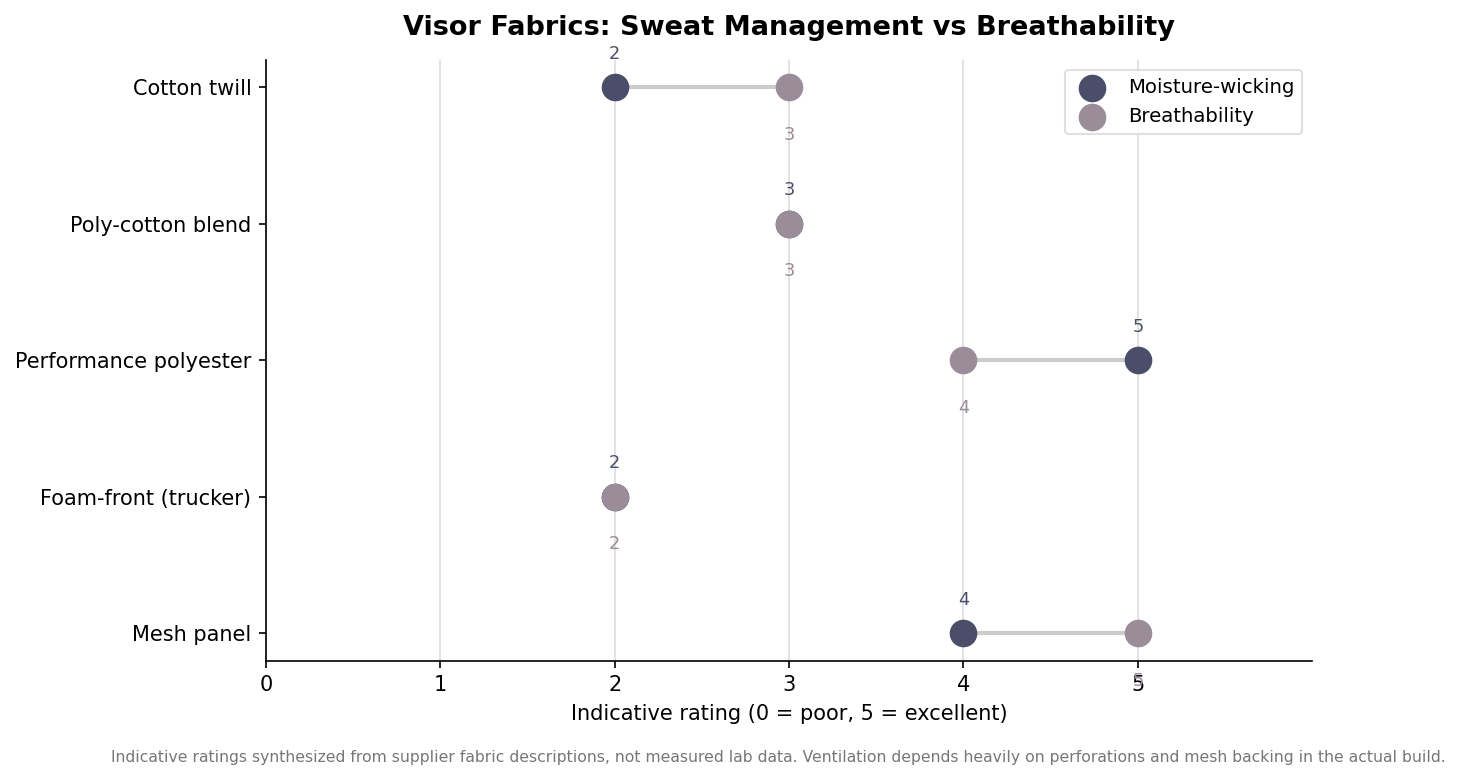
Cotton twill is the classic visor fabric and the reason is comfort: it has a soft, natural hand, breathes well, and takes embroidery cleanly, which makes it a safe pick for corporate, resort, and casual event visors. Its weaknesses show up under sweat and sun. Cotton absorbs moisture rather than moving it, so it dries slowly and can feel heavy on a hot day, it may lose some of its crisp shape when thoroughly soaked, and it is more prone to fading over a season of outdoor use. A cotton-poly blend keeps most of cotton’s soft feel while fixing some of those problems: it dries faster than pure cotton, shrinks less in the wash, and tends to hold embroidery stitches especially well. If you like the look and feel of cotton but the visor will see real activity, the blend is usually the smarter default. The chart below sketches how the common fabrics trade sweat management against breathability; treat the ratings as a directional summary rather than lab measurements.
Performance polyester and mesh: built for sweat and heat
When the visor is going to be worn during exercise or in direct sun for hours, performance polyester is the material that earns its place. Its fibers are engineered to wick moisture away from the skin and dry quickly, it holds its shape through long wear, and it is colorfast enough to survive frequent washing without fading, which is why it dominates golf, running, and team-sport headwear. The main thing to watch is breathability: a solid performance panel is only moderately airy on its own and depends on perforations or vents to move heat. That is where mesh comes in. Polyester or nylon mesh panels maximize airflow and sweat evaporation and keep their form well, at the cost of one thing worth knowing up front: mesh generally is not embroidered, so a logo there has to be printed or applied rather than stitched. Many sport visors pair a solid performance front for the logo with mesh or venting elsewhere to balance decoration against airflow.
Foam-front, straw, and specialty materials
A foam-front visor, borrowed from the trucker cap, gives a tall, structured face and a bold canvas that suits large, colorful, edge-to-edge graphics, especially dye sublimation. The trade-offs are breathability and longevity: the foam is less airy than a woven or mesh panel and can compress or yellow over heavy use, so it is better for statement event pieces than for a daily performance hat. At the other end, straw visors read as resort and beachwear and are chosen for style and shade more than for decoration, since their open weave does not carry a stitched logo well. It is also worth remembering that the sweatband is its own material decision. A terry-cloth sweatband is prized for absorbency, soaking up perspiration, while a performance sweatband wicks it instead; the right choice depends on whether the wearer wants moisture held or moved, and it noticeably affects comfort on a warm day.
Brim core, sweatband, and closure: the construction under the fabric
The face fabric gets the attention, but three structural pieces shape how a visor actually wears. The brim core should be sturdy enough to hold its shape yet flexible enough to be comfortable; most visors ship pre-curved, while some are made to be shaped by the wearer. Brim depth matters for sun: a brim of at least roughly three inches does far more to shade the face than a short one, which is the single easiest specification to get right if sun cover is a goal. The closure then governs fit across a group, and there are four common types, each with a different feel: hook-and-loop straps adjust fast and fit almost anyone, plastic snapbacks click through set increments, buckle closures hold a chosen size securely, and elastic stretch bands slip on with no adjustment at all. For a team or event where heads vary widely, an adjustable closure keeps one order fitting everyone, whereas a fixed stretch band trades adjustability for a cleaner look.
Match the fabric to the decoration and the use
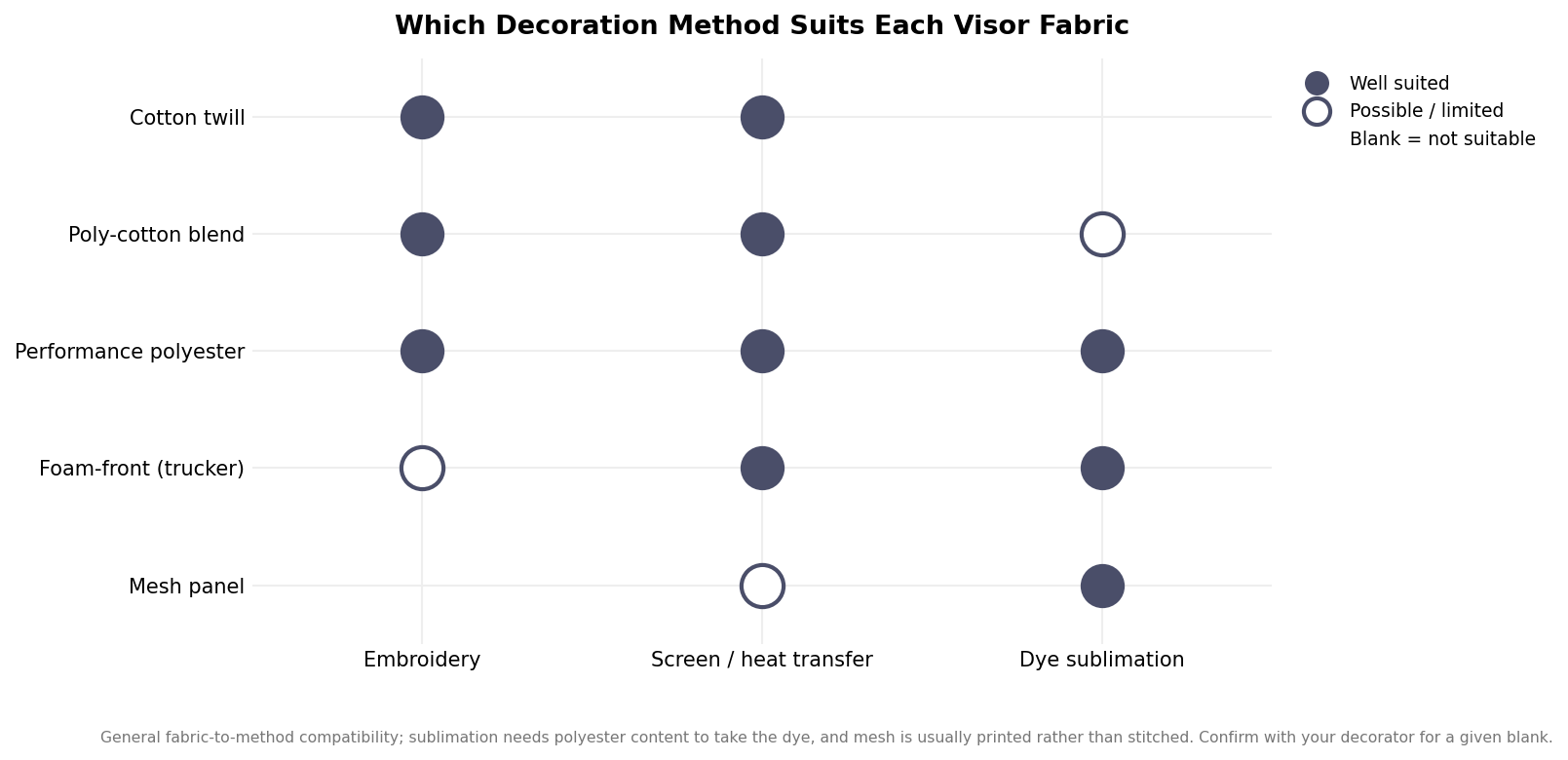
The last step is making sure the fabric and the logo method agree, because a mismatch is the most common reason a finished visor disappoints. Embroidery gives a classic, textured, durable mark and belongs on cotton twill, blends, and solid performance panels, but it struggles with fine detail and photographic art. Screen printing and heat transfer handle intricate, multi-color designs that embroidery cannot. Dye sublimation produces vivid, full-bleed graphics but needs polyester content to take the dye, so it shines on performance and foam-front fabrics and simply will not work on pure cotton. The matrix below maps which method suits which fabric.
Put the pieces together by starting from how the visor will be used. For hot, active wear, lean toward performance polyester with venting, a wicking sweatband, and a decoration method the fabric can carry; for a soft branded look at a relaxed event, cotton or a blend with embroidery is hard to beat; for a bold, graphic statement, a foam-front with sublimation does the job. Because so much of this comes down to feel, the reliable final move is to get a blank sample in the exact fabric, have your logo decorated on it, and then wash it once before committing to the full run. The figures and ratings here are indicative and will vary by mill and supplier, so use them to narrow the field and let a physical sample settle the choice.